

Medication routines are one of the easiest parts of pet care to mess up, especially in busy households or when more than one person helps. Missed doses happen. Double doses happen. And even when you do everything right, it can still feel stressful to keep it all straight.
The good news is you do not need a complicated system. You need a simple schedule that answers one question clearly: what was given, when, and by whom.
Why pet medication tracking breaks down
Most medication mistakes come from one of these:
- The schedule lives in someone’s head
- There’s no “given” confirmation
- Multiple caregivers assume someone else did it
- Instructions change (new dose, tapering, stop date)
- Refills run out unexpectedly
A solid medication schedule prevents all of those.
What to track for every medication
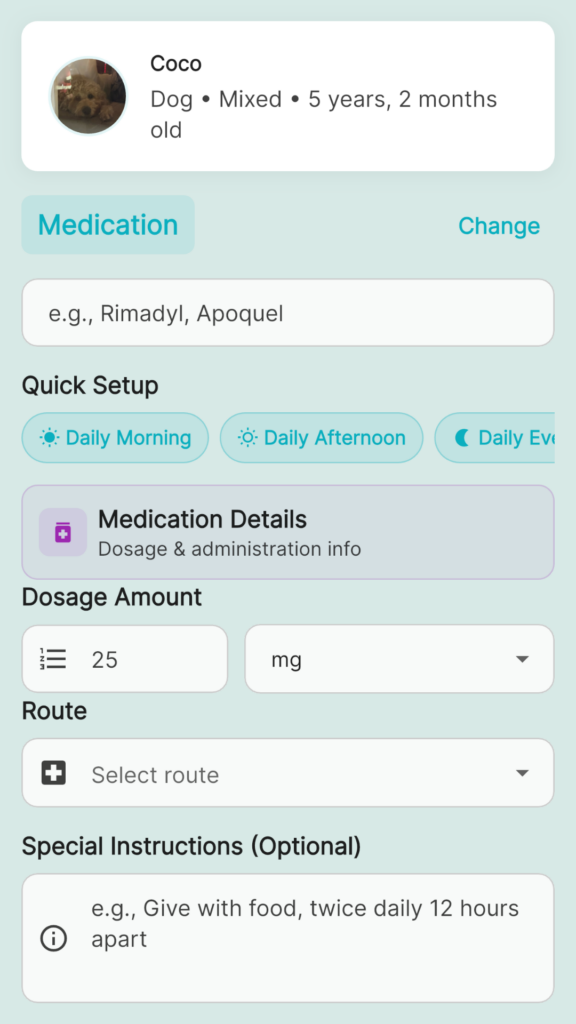
For each medication or supplement, track:
- Name (and what it’s for)
- Dose (example: 1 tablet, 0.5 ml, 10 mg)
- Frequency (once daily, twice daily, every 8 hours)
- Timing (morning, evening, with food, empty stomach)
- Start date and end date (or “ongoing”)
- Side effect notes (if any)
- Refill date (if relevant)
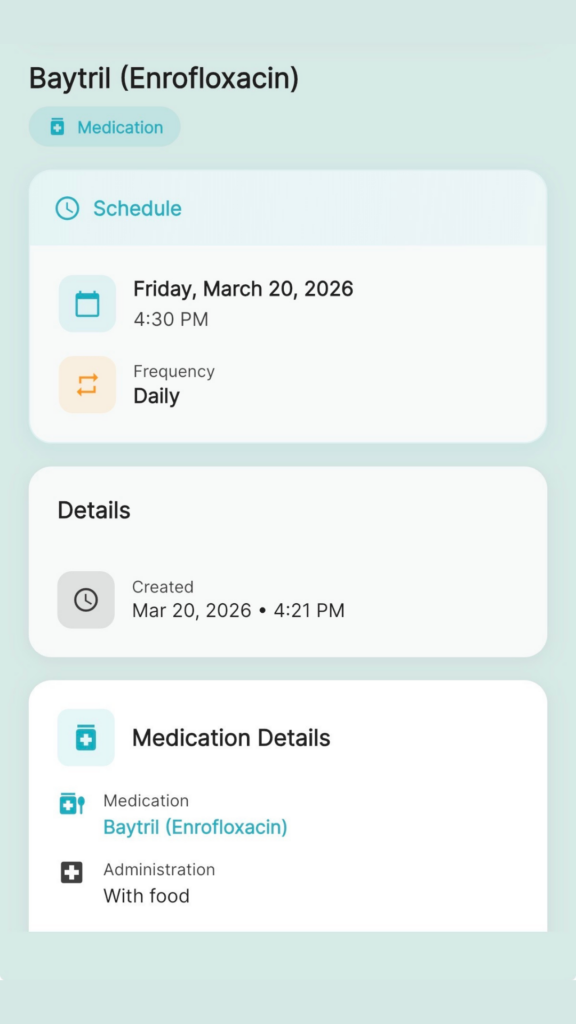
If your pet has multiple medications, these details matter because the instructions are rarely identical.
The simplest system that works
You only need two layers:
Layer 1: The schedule
A clean list of what needs to be given and when.
Layer 2: The confirmation
A checkbox or “given” log entry every time.
If you share pet care responsibilities, the confirmation is not optional. It’s the difference between “pretty sure” and “yes, it’s done.”
Mini medication log
Tips for multi-caregiver homes and sitters
If a partner, roommate, family member, or sitter helps with meds, set these expectations upfront:
- One source of truth. Everyone uses the same schedule.
- No verbal handoffs. If it’s not checked off, it’s not done.
- Define who covers which time. Example: AM is one person, PM is another.
- Add a “missed dose” rule. Example: “If we miss, we call the vet before doubling.”
This prevents the classic “I thought you did it” problem.
What about pets beyond dogs and cats?
Medication tracking applies to every pet type. Birds, reptiles, rabbits, fish, horses, and small mammals often have very specific dosing instructions. A written schedule makes it easier to follow the plan exactly and to report back to your vet accurately.
Common medication tracking mistakes to avoid
- Writing “1 pill” without the medication name
- Not noting last given time (especially for multiple daily doses)
- Keeping instructions only in a text thread
- Not tracking refills
- Changing the dose but not updating the schedule
Keep medication schedules and reminders in one place
If you want a simple way to manage medication schedules, reminders, and shared caregiving, download AllTails Care on the App Store.
FAQ
What if my pet refuses medication?
Ask your vet about alternatives (different formulation, compounding, pill pockets, transdermal, or timing with food). Track what worked so you can repeat it consistently.
Should I track supplements too?
Yes, especially if your pet is on multiple products or has a sensitive stomach. Supplements can affect appetite and GI patterns.
How long should I keep a medication log?
For short courses, keep it until the course ends. For ongoing meds, keep a rolling log and note any dose changes.